Plantinformation
HOME OF PROVEN WINNERS®
Plant Information
Dark Side Of The Moon
Astilbe
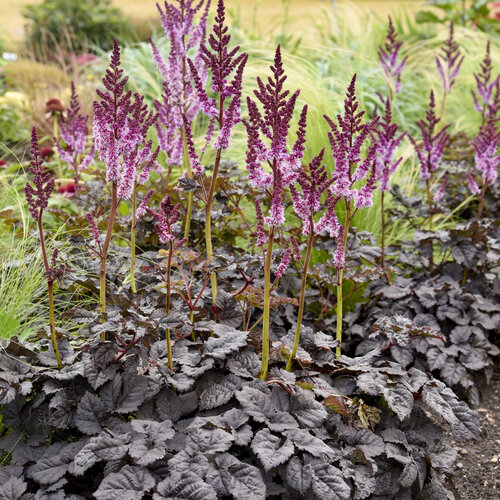
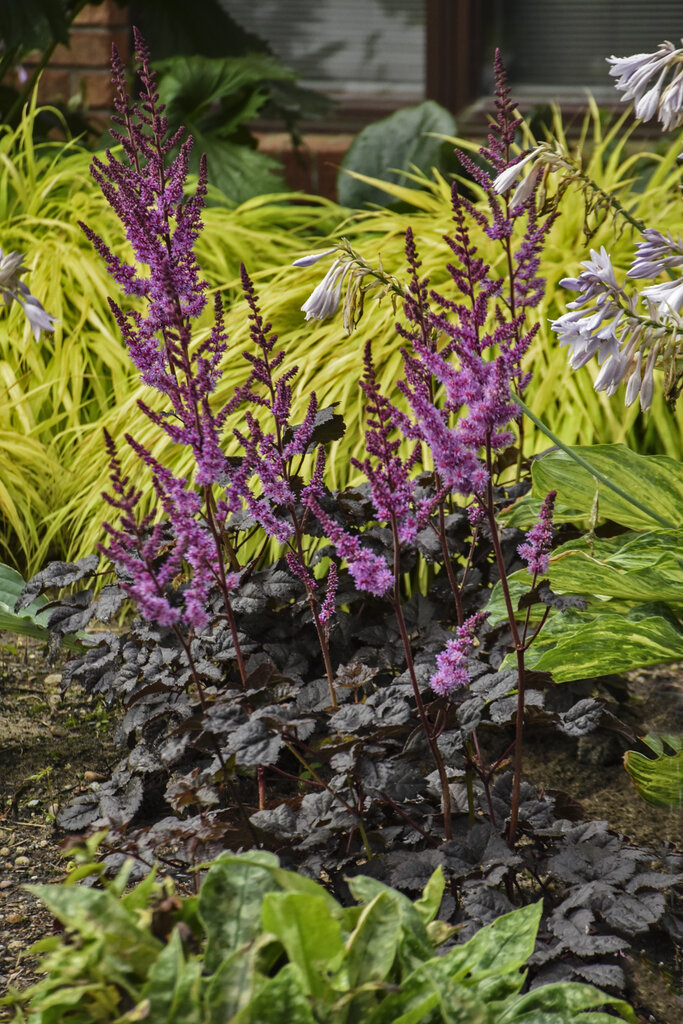
Begins with yellow leaves with a dark margin, turning to completely dark rich chocolate as the foliages progesses in age. Raspberry buds open to rosy-purple flowers to enjoy all summer long. It attracts bees and butterflies while resisting deer and rabbits.
| Blossom Color | Purple |
| Bloom Season | Spring, Summer |
| Exposure | Sun or Shade |
| Height | 20-22 in |
| Width | 24-28 in |
| Spacing | 24-28 in |
| Container Sizes | 1 Gallon |
| Hardiness Zones | 4, 5, 6, 7, 8, 9 |
| Wildlife Attracted | Bees |
| Wildlife Deterred | Deer, Rabbits |
| Features | Begins with yellow leaves with a dark margin, turning to completely dark rich chocolate as the foliages progesses in age. Raspberry buds open to rosy-purple flowers to enjoy all summer long. It attracts bees and butterflies while resisting deer and rabbits. |
| Available Seasons |
| Adaptable as a Houseplant | No |
| Bog Plant | No |
| Is Disease Resistant | No |
| Drought Tolerant | No |
| Edible | No |
| Erosion Control | No |
| Fragrant Flower | No |
| Fragrant Foilage | No |
| Heat Tolerant | No |
| Native to North America | No |
| Salt Tolerant | No |
| Succulent | No |
| Water Plant | No |


| Uses | |
| Maintenance Notes | Astilbes are long-lived perennials that enjoy nutrient rich soils. Though all kinds of astilbe enjoy growing in moist soil, ‘Dark Side of the Moon’ is a cultivar of Astilbe chinensis which can typically handle moderately drier soils compared to other species. However, its growth will be more robust in moist soil. In northern climates, ‘Dark Side of the Moon’ will grow bulkier and have more flowers if grown in sunnier conditions as long as there is adequate moisture. However, it will also grow well in the shade in the North and in warmer climates. Fewer flowers may be produced in deep shade. You will know your astilbe is too dry if the leaves start to develop brown, crispy margins and they start to drop. Prevent this by keeping the soil consistently moist if possible, and increase watering as the plant begins to flower. Wait to cut the old foliage back in the spring rather than in the fall so it can help to protect the plant from winter damage. If part of the root ball has heaved over the winter, meaning risen up above soil level, gently press or dig it back into the ground and apply some fresh humus or compost around the base of the plant. Astilbe can be fed with slow release plant food in late spring before the plant begins to flower. |
| 2022 | Director's Select & Best of Species - Penn State University |
24/7 Retail Ready Ordering for YOU!
it’s easy to order